
IBZ is giving the spotlight to another incredible team of changemakers from the Hack the World: Analyze & Design – GlucoSolutions! Founded by Tenzin Dhonyoe and Justin Allen with the help of Omar Ali-Yare, Raphael Mancini, and Gleb Levashov, GlucoSolutions focuses on creating accessible recreational tools to assist individuals with limited mobility and dexterity in their athletic pursuits.

Diabetes and prediabetes affect hundreds of millions worldwide, yet monitoring blood sugar remains invasive, expensive, and inconvenient. GlucoSolutions, founded by Tenzin Dhonyoe and Justin Allen with the help of Omar Ali-Yare, Raphael Mancini, and Gleb Levashov, is developing a non-invasive wearable for early glucose trend detection, empowering users to take control of their health before it becomes critical.
Instead of relying on finger pricks or implanted sensors, GlucoSolutions uses a light-based sensing system to monitor signals from the body that are associated with changes in blood sugar. The device pairs with a smartphone app designed for everyday use so that users can see their patterns, understand how food, sleep, and activity affect them, and make more informed decisions about their health.
Focused on prevention rather than treatment, GlucoSolutions bridges the gap between clinical glucose monitors and general wellness trackers. It offers accessible, real-time feedback that helps users make small lifestyle adjustments to prevent type 2 diabetes.
To make their dreams a reality, the GlucoSolutions team participated in the Hack the World: Analyze and Design hackathon hosted by the Innovation Boost Zone in 2024. During this intensive, seven-week incubation program, the GlucoSolutions team worked closely with expert mentors and identified gaps in the prediabetes market to idealize their product. Guided by the framework of the United Nations Sustainable Development Goals (SDGs), their project directly contributes to Goal 3: Ensure healthy lives and promote well-being for all ages.
During Hack the World, the founders of GlucoSolutions were inspired to think more broadly about the factors that drive innovation and entrepreneurship, including marketing, technology, and how to reach users and stakeholders throughout the development process. Hack the World and the IBZ provided the GlucoSolutions team with the resources and support needed to take the next steps in bringing their product to market.
Currently in its prototype phase, GlucoSolutions is looking for clinicians and health economists to help bring this device to people who need it most. This innovative device takes a proactive approach to healthcare to help folks “keep life safe and sweet.”
Hack the World: Analyze & Design was the second program in a series of three innovative experiential learning opportunities hosted by Innovation Boost Zone. In this phase, four student-led teams from TMU engaged with their stakeholders and worked with field experts to gain new insights and deliver a product or service to provide solutions to real-world problems. This hackathon provided students with a clear runway to success, bolstering them to evaluate and test their ideas and make a positive impact.
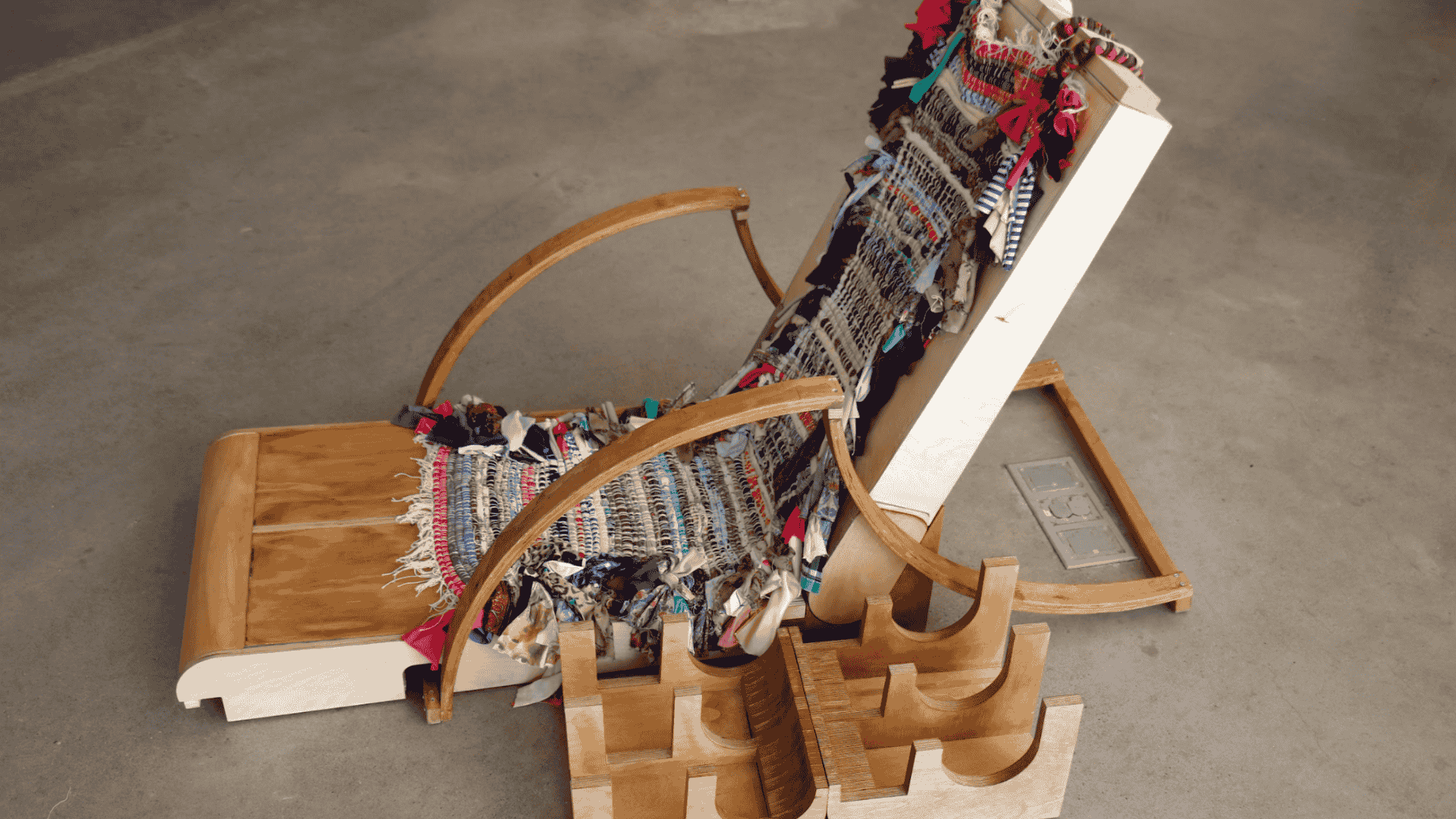
The competition was fierce, featuring standout finalists who pushed the boundaries of sustainable fabrication. Notable projects included TREAD / 01 (by Myrah Mohammed and Lynn John-Koshy), The Helitack Chair (by Thalia Arkuszewski, Gavin Brown, and Joey He), Taking the Edge Off (by Emma Wood, Alicia Unwin, and Kaylee Mikalauskas), and Λlcove (by Enakshi Chatterjee and Riddhi Bilakhia).
At the heart of Reclaiming Future was a commitment to sustainability as both a mindset and a method. Students were encouraged to think critically about consumption, waste, and design lifecycles, engaging directly with principles of circular design. Rather than seeing materials as disposable, they were challenged to view them as resources—full of untapped potential.
This transformation didn’t happen in isolation. The project was supported by the Design Fabrication Zone at the Student Learning Centre, an accessible makerspace where students gained access to tools, training, and mentorship. For many participants, this meant stepping into entirely new territory—learning how to safely operate equipment, experimenting with fabrication techniques, and translating conceptual ideas into tangible forms.
For competition winner Nehir Korkmaz, the structured support was a highlight of the experience.
"Workshops were very well planned, and everyone involved was highly knowledgeable," Korkmaz shared. "I learned a great deal throughout the process thanks to these workshops. They not only helped me with this competition, but also gave me valuable knowledge for my future studies."
That learning curve became a central part of the exhibit. Students weren’t just creating final products; they were building the confidence to lead the next generation of sustainable design.
What made the showcase particularly compelling was its emphasis on narrative. Like in a fullbodied art exhibition, each piece invited viewers to reflect on its journey: Where did this material come from? What idea does it convey? And what might it become next? In this way, Reclaiming the Future extended beyond a showcase—it became a conversation about how we assign value, and how we might rethink our relationship with the objects that surround us.
Ultimately, Reclaiming the Future was a reminder that meaningful climate action doesn’t always begin with sweeping changes. Sometimes, it starts with a single material, a new skill, or a shift in perspective. With the right support and space to explore, those small beginnings can grow into something transformative.
At TMU, that transformation is already underway: one project, one story, and one reclaimed future at a time.


