
IBZ is proud to celebrate the completion of Hack the World: Analyze & Design—a transformative, seven-week bootcamp-style incubation program!

The Innovation Boost Zone is proud to celebrate the completion of Hack the World: Analyze & Design—a transformative, seven-week bootcamp-style incubation program designed to help TMU students turn their visionary ideas into tangible, world-changing solutions.
This initiative marks the second phase of Hack the World, following the successful kickoff of Hack the World: Explore in Fall 2024. That week-long hackathon challenged students to tackle global challenges through the lens of the University. Students formed multidisciplinary teams, ideated bold solutions, and generated 87 original concepts to reverse the damaging impacts of decades of unsustainable development.
Hack the World: Analyze & Design took those initial concepts a step further. Three standout teams were selected to join this intensive incubation phase, where they worked closely with expert mentors and advisors from TMU’s STEM and impact-driven Zones: Innovation Boost Zone, Science Discovery Zone, Clean Energy Zone, Design Fabrication Zone, and Social Ventures Zone.
Throughout the program, these student innovators developed working prototypes to secure partnerships with real-world beta testers and organizations. Each team tackled a unique facet of sustainable development, from equitable healthcare to smart infrastructure to inclusive recreation.
Members: Tenzin Dhonyoe, Justin Allen, Omar Ali Yare, Raphael Mancini, Gleb Levashov
GlucoSense empowers people with prediabetes through a non-invasive wearable that encourages lifestyle changes before diabetes becomes irreversible. GlucoSense is looking for clinicians and health economists to help bring this device to people who need it most.
Members: Swaraj Bhowmick, Jimmy Tang
RecAbility aims to make sport and recreation more accessible for those with disabilities by creating everyday recreational products. By creating a whole new market, RecAbility is bringing a world of possibilities to the disability community worldwide. RecAbility invites engineers, manufacturers, and partners to help make our vision a reality.
Members: Amir Keshavarz Fard, Ali Ghobadzadeh
CityOptima tracks, models, and optimizes municipal asset management. Leveraging GIS-centric data analysis and AI-driven insights, the platform empowers city managers to drive better budget decisions and enhance the citizen experience. CityOptima invites municipal planners and infrastructure managers to test the product and help refine its offering.
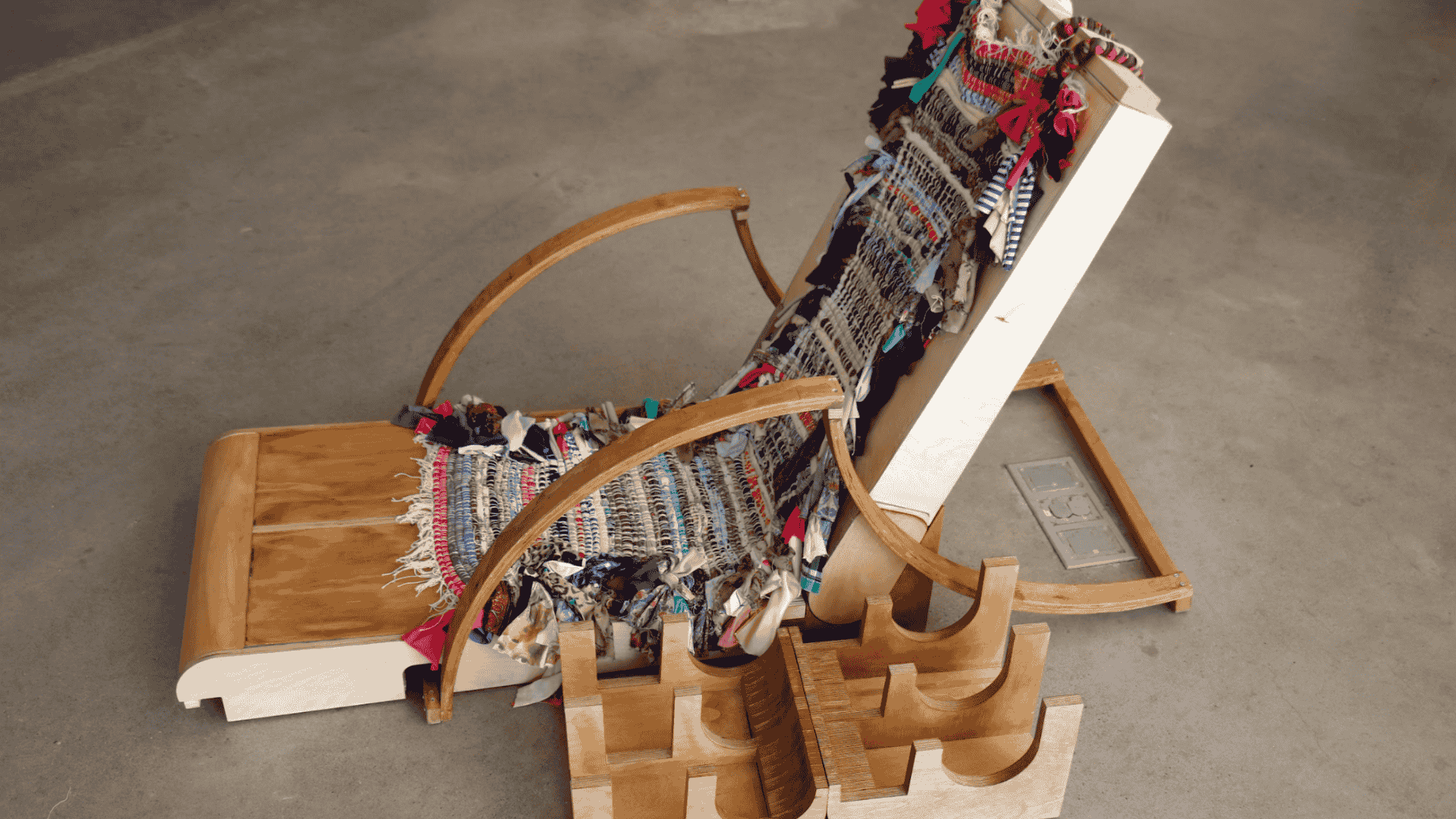
The competition was fierce, featuring standout finalists who pushed the boundaries of sustainable fabrication. Notable projects included TREAD / 01 (by Myrah Mohammed and Lynn John-Koshy), The Helitack Chair (by Thalia Arkuszewski, Gavin Brown, and Joey He), Taking the Edge Off (by Emma Wood, Alicia Unwin, and Kaylee Mikalauskas), and Λlcove (by Enakshi Chatterjee and Riddhi Bilakhia).
At the heart of Reclaiming Future was a commitment to sustainability as both a mindset and a method. Students were encouraged to think critically about consumption, waste, and design lifecycles, engaging directly with principles of circular design. Rather than seeing materials as disposable, they were challenged to view them as resources—full of untapped potential.
This transformation didn’t happen in isolation. The project was supported by the Design Fabrication Zone at the Student Learning Centre, an accessible makerspace where students gained access to tools, training, and mentorship. For many participants, this meant stepping into entirely new territory—learning how to safely operate equipment, experimenting with fabrication techniques, and translating conceptual ideas into tangible forms.
For competition winner Nehir Korkmaz, the structured support was a highlight of the experience.
"Workshops were very well planned, and everyone involved was highly knowledgeable," Korkmaz shared. "I learned a great deal throughout the process thanks to these workshops. They not only helped me with this competition, but also gave me valuable knowledge for my future studies."
That learning curve became a central part of the exhibit. Students weren’t just creating final products; they were building the confidence to lead the next generation of sustainable design.
What made the showcase particularly compelling was its emphasis on narrative. Like in a fullbodied art exhibition, each piece invited viewers to reflect on its journey: Where did this material come from? What idea does it convey? And what might it become next? In this way, Reclaiming the Future extended beyond a showcase—it became a conversation about how we assign value, and how we might rethink our relationship with the objects that surround us.
Ultimately, Reclaiming the Future was a reminder that meaningful climate action doesn’t always begin with sweeping changes. Sometimes, it starts with a single material, a new skill, or a shift in perspective. With the right support and space to explore, those small beginnings can grow into something transformative.
At TMU, that transformation is already underway: one project, one story, and one reclaimed future at a time.


