
At Toronto Metropolitan University, Climate Week is more than a moment for conversation—it’s a catalyst for action. This year, Reclaiming The Future: Sustainability Exhibit stood out as a powerful example of what happens when sustainability moves beyond theory and into practice.
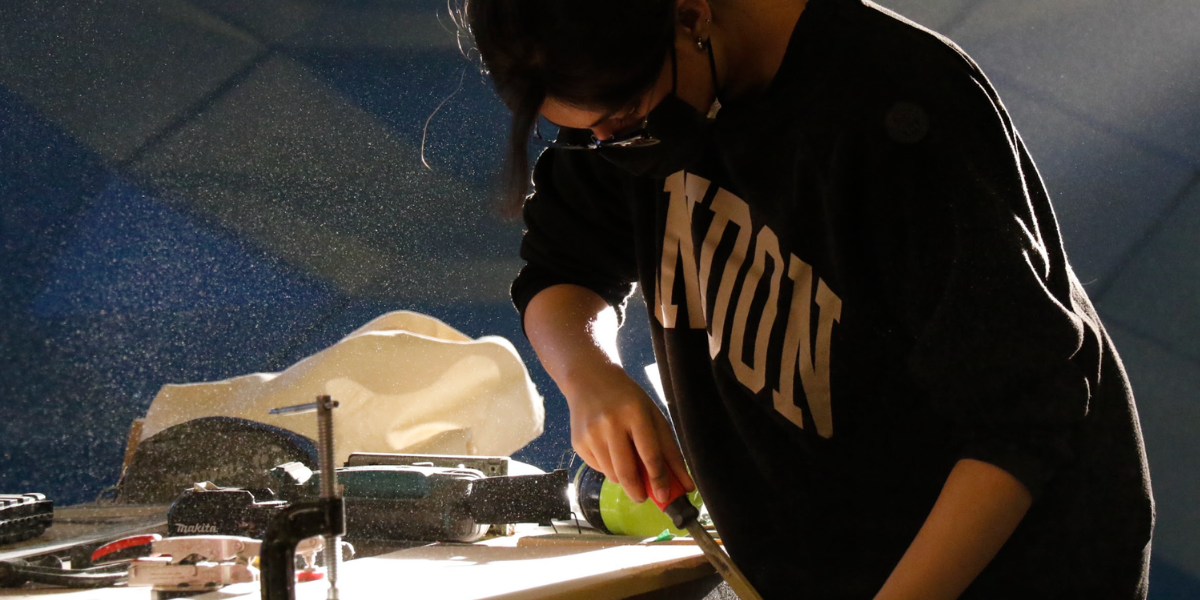
Organized as a collaboration between Innovation Boost Zone, Design Fabrication Zone, and The Sustainability Office, with support from Experience Ventures, the showcase brought together students from different disciplines to present projects they had been developing and handcrafting over several weeks. Their shared challenge was deceptively simple: take discarded or overlooked materials and transform them into functional, meaningful chairs.
Across the exhibition, visitors encountered a striking collection of work—furniture built from recycled tires and wood, reimagined fire hoses, and second-hand scraps that blurred the line between art and utility. Each project told a story, not only about the material it once was, but about the possibilities it could hold when approached with care, creativity, and intention.
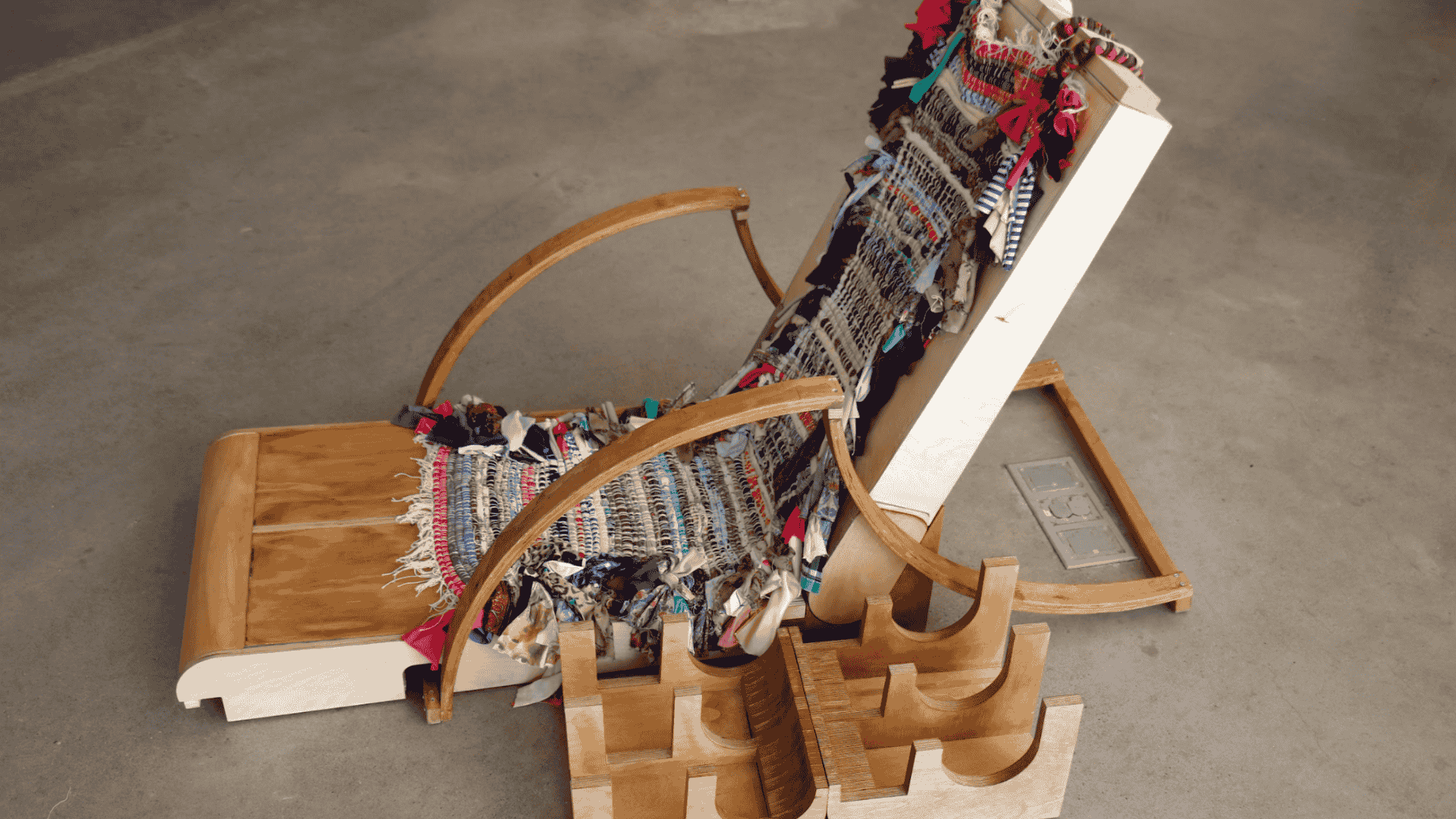
Leading this charge was the winning team, Nehir Korkmaz and Jessica Zhang, with their project titled The Metamorphic Chair. Their work served as a masterclass in circular design, utilizing reclaimed podiums from the DFZ and scavenged recycled fabrics woven into a delicate tapestry. Finished with coffee stains and beeswax, the team constructed a sturdy, artistically intricate structure that maximized the potential of used materials while maintaining functional versatility. Congratulations to the winners!
The competition was fierce, featuring standout finalists who pushed the boundaries of sustainable fabrication. Notable projects included TREAD / 01 (by Myrah Mohammed and Lynn John-Koshy), The Helitack Chair (by Thalia Arkuszewski, Gavin Brown, and Joey He), Taking the Edge Off (by Emma Wood, Alicia Unwin, and Kaylee Mikalauskas), and Λlcove (by Enakshi Chatterjee and Riddhi Bilakhia).
At the heart of Reclaiming Future was a commitment to sustainability as both a mindset and a method. Students were encouraged to think critically about consumption, waste, and design lifecycles, engaging directly with principles of circular design. Rather than seeing materials as disposable, they were challenged to view them as resources—full of untapped potential.
This transformation didn’t happen in isolation. The project was supported by the Design Fabrication Zone at the Student Learning Centre, an accessible makerspace where students gained access to tools, training, and mentorship. For many participants, this meant stepping into entirely new territory—learning how to safely operate equipment, experimenting with fabrication techniques, and translating conceptual ideas into tangible forms.
For competition winner Nehir Korkmaz, the structured support was a highlight of the experience.
"Workshops were very well planned, and everyone involved was highly knowledgeable," Korkmaz shared. "I learned a great deal throughout the process thanks to these workshops. They not only helped me with this competition, but also gave me valuable knowledge for my future studies."
That learning curve became a central part of the exhibit. Students weren’t just creating final products; they were building the confidence to lead the next generation of sustainable design.
What made the showcase particularly compelling was its emphasis on narrative. Like in a fullbodied art exhibition, each piece invited viewers to reflect on its journey: Where did this material come from? What idea does it convey? And what might it become next? In this way, Reclaiming the Future extended beyond a showcase—it became a conversation about how we assign value, and how we might rethink our relationship with the objects that surround us.
Ultimately, Reclaiming the Future was a reminder that meaningful climate action doesn’t always begin with sweeping changes. Sometimes, it starts with a single material, a new skill, or a shift in perspective. With the right support and space to explore, those small beginnings can grow into something transformative.
At TMU, that transformation is already underway: one project, one story, and one reclaimed future at a time.


